I used to eat salads like I was being punished. You know the type: a sad pile of iceberg lettuce, a few limp cucumber slices, and a plastic cup of ranch dressing that had separated into oil and regret. It was the kind of lunch that left me hungry an hour later and staring longingly at the vending machine in the breakroom. I spent years thinking “healthy eating” meant boring, bland food that I dreaded pulling out of my Tupperware.
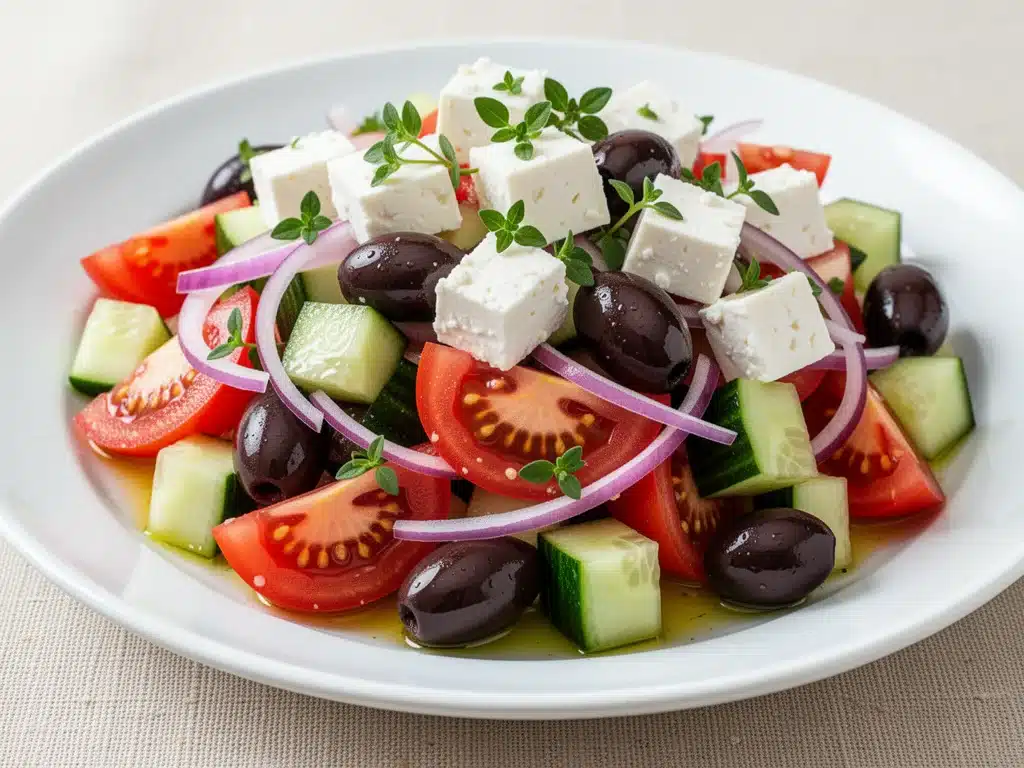
Then, about two years ago, I had a revelation. I was at a small taverna in Athens (or at least, the closest thing to one in my hometown), and I ordered a chopped salad. It wasn’t just “salad.” It was a vibrant, crunchy, flavor-bomb explosion of textures. The feta was salty and creamy, the olives briny, the cucumbers snap-crunchy, and the tomatoes juicy. I ate it in three bites because I was too busy chewing to stop.
I got home and immediately tried to recreate it. My first attempt was a mess. The veggies were cut too big, the dressing was too vinegary, and the cheese was clumped together. But I kept going. I tweaked the chopping technique, adjusted the oil-to-vinegar ratio, and experimented with different cheeses. After about ten tries, I finally nailed it. This chopped Greek salad became my go-to lunch for the next six months. I made it so often that my coworkers started asking for the recipe. They’d see me unpacking my container and sigh with jealousy because mine always looked more colorful and appetizing than their usual turkey sandwich.
Here’s the thing about this chopped Greek salad: it’s not just a side dish. It’s a complete meal that actually keeps you full. The combination of healthy fats from the olive oil and feta, protein from the cheese, and fiber from the veggies creates a perfect balance. It’s the kind of lunch that doesn’t leave you feeling sluggish in the afternoon. It’s bright, it’s fresh, and it tastes like summer even in the middle of winter.
I’ve tested this recipe with everything from rotisserie chicken to grilled shrimp, but the base version is what I come back to. It’s stupid simple, requires zero cooking (unless you want to warm the pita), and comes together in about 15 minutes. If you’re tired of boring lunches and want something that tastes like a vacation, you need to try this. It’s easily the best healthy lunch I’ve ever made.
Why You’ll Love This Chopped Greek Salad
There are a lot of salad recipes out there. I’ve clicked on hundreds of them. But this chopped Greek salad is different. It’s not just a list of ingredients thrown in a bowl. It’s a specific technique, a specific ratio, and a specific vibe that makes it addictive. Here’s why I keep making it, week after week:
- It’s Actually Filling — Most salads leave me hungry by 3 PM. This one? I’m good until dinner. The feta cheese and olive oil provide enough healthy fats to keep your blood sugar stable, and the dense chopping means you’re getting more veggies in every bite. I’ve had this for lunch on days when I skipped breakfast, and I didn’t hit a wall. That’s rare for me.
- Zero Cooking Required — Seriously. No stove, no oven, no cleanup. If you can chop a cucumber and toss a bowl, you can make this. I make this on busy Tuesdays when I’m running late for work, and on lazy Sundays when I don’t want to turn on the kitchen. It’s the ultimate low-effort, high-reward meal.
- It Gets Better the Next Day — This is the most surprising part. I usually make enough for two lunches. The second day, the flavors have melded together. The onions have softened slightly, the cheese has absorbed some of the vinaigrette, and the whole thing tastes even more cohesive. It’s not just good leftovers; it’s legitimately improved.
- Customizable to Hell — I love that this recipe is a blank canvas. Want it heartier? Add chickpeas or grilled chicken. Want it vegan? Skip the feta and use tofu or just extra olives. Hate kalamata olives? Use green ones. It’s forgiving. I’ve made this for friends with dietary restrictions, and we all found a version we loved. It’s a crowd-pleaser without being complicated.
- Meal Prep Friendly — I chop all my veggies on Sunday night. It takes about 20 minutes total. During the week, I just grab a handful of each container, add the cheese and olives, and toss. It takes less time than walking to the coffee shop. It’s saved me from buying overpriced, unhealthy lunch options more times than I can count.
So basically, if you want a lunch that’s fast, healthy, delicious, and leaves you feeling satisfied, this is it. It’s my answer to “what’s for lunch?” when I’m tired of sandwiches and don’t feel like cooking. It’s reliable. It’s vibrant. And it’s going to change the way you think about salads.
Ingredients You’ll Need for the Perfect Chopped Greek Salad
Here’s the best part: you probably have most of this already. This isn’t a recipe that requires a trip to three different specialty stores. It’s built on pantry staples and fresh produce you can find anywhere. That said, I am particular about three things: the cheese, the oil, and the freshness of the veggies. Let’s break it down.
For the Salad Base:
Romaine lettuce (1 large head or 6 cups chopped) — I use romaine because it holds up better than iceberg or butter lettuce. It’s crunchy and has a nice bitter edge that balances the rich dressing. Chop it finely. I know, I know, no one likes mushy lettuce, but chopping it finely means every bite has veggies, not just big leaves.
English cucumber (2 medium, chopped) — English cucumbers are better because they have thinner skins and fewer seeds. You don’t need to peel them, which saves time. Chop them into small, bite-sized pieces. If you only have regular cucumbers, peel them first and scoop out the seeds. They can be watery and make the salad soggy.
Red onion (1 small, finely diced) — This is non-negotiable. The sharp bite of red onion cuts through the creaminess of the feta. Finely dice it so you get a little bit in every spoonful. If raw onion is too strong for you, soak the diced onion in cold water for 10 minutes before adding it to the salad. It mellows the bite significantly.
Cherry tomatoes (2 cups, halved) — I use cherry tomatoes because they’re sweet and juicy. Roma tomatoes can be too watery and bland. Halve them so they’re bite-sized. If you’re using vine-ripened tomatoes, make sure they’re firm. Squishy tomatoes mean the salad will be a mess.
Kalamata olives (1 cup, pitted and halved) — These are the soul of the salad. Their briny, wine-like flavor is essential. If you can’t find Kalamata, green olives work, but Kalamata are superior. Pitted is a must—no one wants to pick pits out of their lunch at their desk.
For the Flavor:
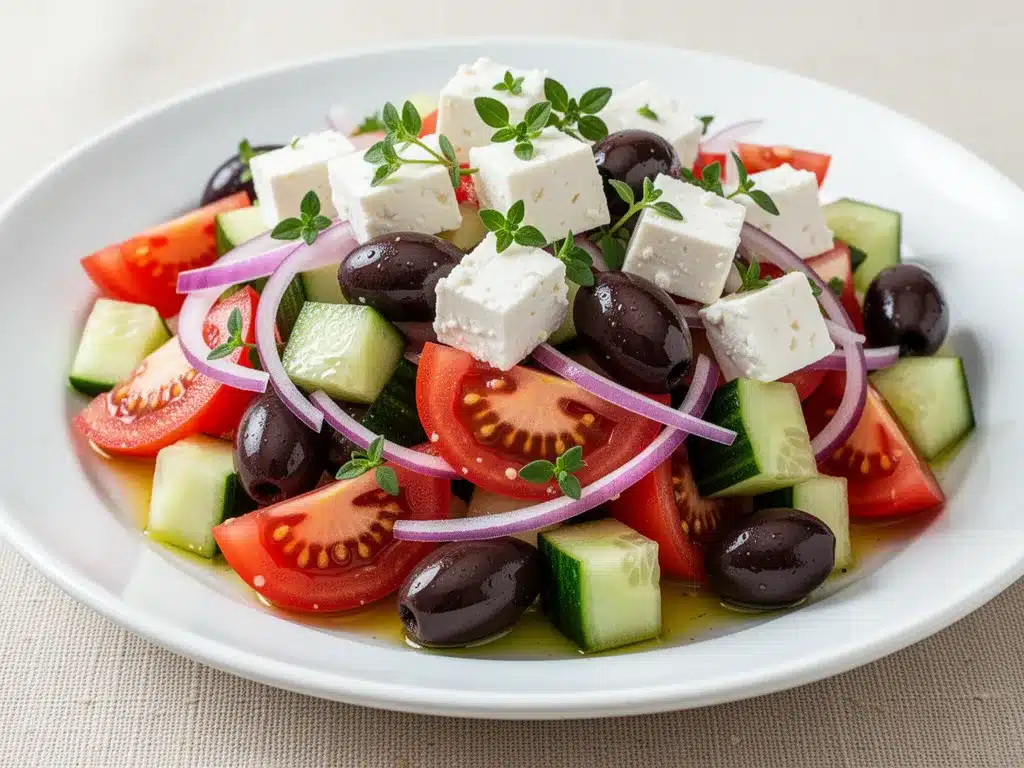
Feta cheese (1 cup, crumbled) — Use real feta, not the cheap stuff in the plastic tub that tastes like plastic. Look for feta in brine. It’s creamier and tangier. Crumble it by hand. If you buy a block, grate it or crumble it yourself. Pre-crumbled feta often has anti-caking agents that make it dry. I buy a block and crumble it right before making the salad. It makes a huge difference.
Extra virgin olive oil (1/3 cup) — Don’t skimp here. This is the base of your dressing. Use a good quality extra virgin olive oil. If it tastes bitter or grassy in the bottle, it’ll taste great in the salad. I keep a specific bottle just for salads. It’s worth the investment.
Red wine vinegar (3 tablespoons) — This gives the salad its acidity. Apple cider vinegar works too, but red wine vinegar has a sharper, more traditional Greek flavor. Avoid balsamic; it’s too sweet and dark for this.
Dried oregano (1 teaspoon) — This is the signature Greek herb. Use dried, not fresh. Dried oregano is more potent and infuses better into the oil. Fresh oregano is great, but it doesn’t hold up as well in a dressing. If you only have fresh, use twice as much, but dried is best.
Garlic (1 clove, minced) — Just one. Fresh garlic only. No jarred garlic in this recipe. It adds a subtle background note that ties everything together. Mince it finely so it disperses evenly.
Kosher salt and black pepper (to taste) — Season generously. The veggies need salt to pop. I use about 1/2 teaspoon salt, but taste as you go.
Optional Add-ins (Because Why Not?):
Chickpeas (1 can, drained and rinsed) — I add these for extra protein and fiber. They make the salad heartier and more filling. Great if you’re vegetarian or just want more substance.
Grilled chicken or shrimp (2 cups) — If you want to turn this into a main course, add protein. Leftover rotisserie chicken works perfectly. Or grill some shrimp for a lighter option.
Pita bread (2 cups, cubed and toasted) — I love the crunch of toasted pita. Cube it, toss with a little olive oil, and bake at 350°F for 10 minutes. It’s like croutons, but better.
Feta cheese (1 cup, crumbled) — I already mentioned this, but it’s important enough to list twice. Don’t skip the feta.
Equipment Needed
You don’t need fancy equipment for this. Here’s what I actually use:
Large mixing bowl — I use a 6-quart bowl. It needs to be big enough to toss everything without spilling. My stainless steel bowl is perfect. If you don’t have one, a large roasting pan works too.
Sharp chef’s knife — For chopping veggies. A dull knife makes you cry more—literally and figuratively. Learn to sharpen your knife. It changes everything.
Cutting board — Any size works. I use a large wooden one. Plastic is fine too, just easier to clean.
Whisk or fork — For mixing the dressing. A small whisk is nice, but a fork works perfectly. You’re not emulsifying mayonnaise here.
Measuring cups and spoons — Standard stuff. Dollar store versions work fine. Accuracy matters for the dressing ratio.
Colander — For rinsing chickpeas (if using). Or just rinse them under the tap.
Small bowl — For mixing the dressing separately. This ensures even distribution. I’ve tried mixing the dressing directly in the big bowl, and it ends up clumpy. Don’t make my mistake.
Optional but nice:
- Salad spinner — If you wash your veggies, a spinner dries them quickly. Wet veggies = watery dressing. I use mine for lettuce, but for this chopped salad, I usually just pat them dry with a paper towel.
- Pizza cutter — I use this to chop the romaine quickly. It’s faster than a knife for leafy greens. Weird hack, but it works.
How to Make It: Step-by-Step
Alright, let’s make this! I’m walking you through exactly how I do it, including the little tricks I’ve picked up. It’s simple, but the order matters.
Step 1: Prep Your Veggies (10 minutes)
Before you start, chop everything. Wash and dry your romaine lettuce. Chop it into 1/2-inch pieces. It should look like little bits, not leaves. Chop the cucumber into 1/2-inch pieces. Dice the red onion finely. Halve the cherry tomatoes. Pit and halve the olives. If you’re adding chickpeas, drain and rinse them. If you’re adding chicken, chop it into bite-sized pieces. Set everything aside in separate bowls or on plates. I know it seems like a lot of prep, but it makes the assembly super fast.
Step 2: Make the Dressing (2 minutes)
In a small bowl, whisk together the extra virgin olive oil, red wine vinegar, minced garlic, dried oregano, salt, and black pepper. Whisk vigorously until it’s well combined. The mixture should look emulsified—slightly thickened and glossy. Taste it. It should be tangy and salty. If it’s too sour, add a pinch more salt. If it’s too bland, add a splash more vinegar. This is the most important step. Good dressing = good salad.
Step 3: Combine the Salad (5 minutes)
In your large mixing bowl, add the chopped romaine, cucumber, red onion, tomatoes, and olives. If you’re adding chickpeas or chicken, add them now. Toss everything gently to combine. You want the veggies to be evenly distributed. Don’t crush the lettuce; just mix until it’s all together.
Step 4: Add the Cheese and Dressing (2 minutes)
Pour the dressing over the salad. Toss again, making sure every bit of veggie is coated. The dressing should cling to the veggies, not pool at the bottom. Add the crumbled feta cheese. Gently fold it in. Don’t stir too hard, or the feta will turn into mush. You want chunks of cheese, not a paste.
Step 5: Taste and Adjust (1 minute)
Taste a spoonful. Does it need more salt? More pepper? More vinegar? Adjust as needed. This is where you make it your own. I usually add a pinch more salt because the feta is salty, but the veggies need it too. Once you’re happy, serve immediately.
Step 6: Serve
Serve in individual bowls or directly from the big bowl. Top with extra crumbled feta and a sprinkle of oregano. If you’re adding toasted pita, toss it in right before serving so it stays crunchy. This chopped Greek salad is best fresh, but leftovers are great too.
Total Time: About 15 minutes (10 minutes active, 5 minutes tossing)
Troubleshooting:
- Soggy salad? You didn’t dry your veggies enough. Or you added the dressing too early. Dress it right before eating.
- Bland taste? Not enough salt or vinegar. Taste and adjust. Veggies are bland; they need seasoning.
- Too much onion? Soak the diced onion in cold water for 10 minutes to mellow the bite.
Expert Tips & Tricks
Here’s everything I’ve learned from making this dozens of times. These tips will save you from my mistakes.
Chop Everything Uniformly
This is the #1 tip. If your pieces are different sizes, you get uneven bites. One bite is all onion, the next is all lettuce. Chop everything to about 1/2 inch. It’s tedious, but it makes the salad better. I use a pizza cutter for the lettuce to speed it up.
Don’t Skimp on the Oil
This isn’t a low-fat salad. The olive oil is the flavor carrier. If you use too little, the salad tastes dry and bland. Use the full 1/3 cup. Your body needs healthy fats, and your taste buds will thank you.
Fresh Feta Only
Pre-crumbled feta is often dry and chalky. Buy a block and crumble it yourself. It’s creamier, tangier, and melts better. It’s worth the extra 2 minutes.
Toast the Pita
If you’re adding pita, don’t skip the toasting. Stale pita is sad. Toasted pita is crunchy and delicious. Cube it, toss with olive oil, and bake at 350°F for 10 minutes. Let it cool before adding to the salad.
Make It Ahead
Chop all the veggies and store them in separate containers in the fridge. When you’re ready to eat, just toss them together with the dressing and cheese. It saves time during the week.
Variations & Substitutions
Once you’ve nailed the basic version, here’s how you can mix it up. I’ve tried all of these.
Protein-Packed
Add 2 cups of grilled chicken, shrimp, or chickpeas. This turns the salad into a main course. My husband prefers this version—it’s more filling.
Vegan Version
Skip the feta and use tofu or nutritional yeast for a cheesy flavor. Or just use extra olives and capers. It’s still delicious.
Spicy Kick
Add red pepper flakes to the dressing. Or slice in some jalapeños. It adds a nice heat.
Mediterranean Twist
Add artichoke hearts and sun-dried tomatoes. It’s richer and more intense.
Gluten-Free
This is naturally gluten-free if you skip the pita. Check your olives and feta for added wheat, but they’re usually safe.
Serving & Storage
How to Serve:
I serve this straight from the bowl. It’s rustic and beautiful. But here are other ways:
- Over a bed of mixed greens
- Inside a pita pocket
- On top of grilled fish
Storage:
Store in an airtight container in the fridge for up to 3 days. The salad will wilt slightly, but it’s still good. Don’t freeze it. The lettuce will turn to mush.
Reheating:
Don’t reheat this. It’s a cold salad. Eat it cold or at room temperature.
Nutrition Information
I’m not a nutritionist, but here’s the breakdown if you’re tracking.
Per Serving (based on 4 servings):
- Calories: 280
- Protein: 8g
- Carbs: 12g
- Fiber: 3g
- Sugar: 6g
- Fat: 22g
What’s Good:
- High in healthy fats from olive oil and feta
- Good source of calcium from cheese
- Low in carbs
What to Know:
- Higher in calories from oil and cheese
- Contains dairy
My Take:
Look, this is a healthy lunch with good fats and protein. It’s not a diet recipe, but it’s way better than a sandwich. When I want to make it lighter, I reduce the oil and feta. But usually? I just enjoy it.
Final Thoughts
So that’s my go-to chopped Greek salad! I’ve probably talked your ear off at this point, but when you make a recipe this often, you have a lot to say about it.
This has saved weeknight lunches more times than I can count. It’s my answer to “what’s for lunch?” when I’m tired of sandwiches and don’t feel like cooking. My coworkers are happy, my kids are happy, and I’m happy because I’m not stressed about cooking.
Make it yours! Try different add-ins, swap in your favorite vegetables, adjust the garlic. The best recipes are the ones you adapt to your family’s tastes.
If you make this, drop a comment and let me know what you think! I love hearing how recipes turn out in your kitchen. And if something doesn’t work, tell me that too—I’m here to help troubleshoot.
Happy cooking! And I hope your kitchen smells half as good as mine does right now.
Frequently Asked Questions
Can I use iceberg lettuce instead of romaine?
You can, but romaine is better. It’s crunchier and holds up to the dressing without getting soggy. Iceberg is watery and bland. If you must use iceberg, chop it finely and use less dressing.
Why did my salad turn out watery?
Usually means you didn’t dry your veggies enough. Tomatoes and cucumbers release water. Pat them dry with a paper towel before chopping. Also, don’t add the dressing until right before serving.
Can I make this ahead for a meal prep?
Sort of. Chop all the veggies and store them in separate containers. Mix the dressing and store it separately. When you’re ready to eat, toss everything together. It’s better than pre-mixed, which gets soggy.
Can I use goat cheese instead of feta?
You can, but it’s different. Goat cheese is tangier and softer. Feta is saltier and crumblier. If you use goat cheese, use less salt in the dressing.
How long does this salad last?
Up to 3 days in the fridge. After that, the lettuce wilts and the veggies get mushy. It’s best fresh.
Can I freeze this salad?
No. The lettuce and veggies will turn to mush when thawed. Make it fresh.
Can I double this recipe?
Absolutely! Double everything and use your biggest bowl. The cooking times stay the same. I do this when I’m meal-prepping or feeding a crowd.
Pin This Recipe!
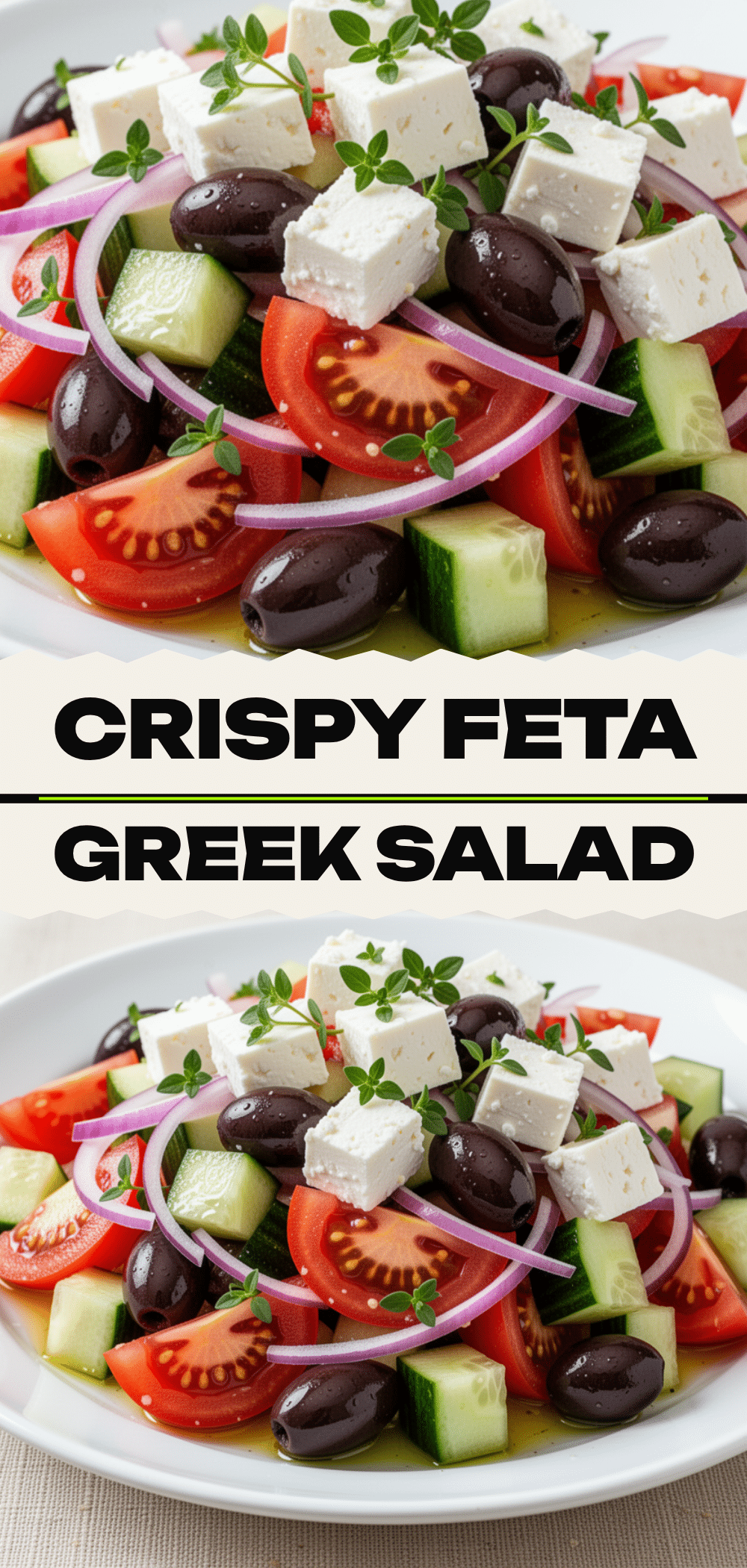
Chopped Greek Salad: Easy Healthy Lunch
- Total Time: 15 minutes
- Yield: 4 servings 1x
Description
A vibrant, crunchy, and flavor-packed chopped Greek salad that serves as a complete, filling lunch. This no-cook recipe combines crisp vegetables, salty feta, and a tangy olive oil dressing for a healthy meal that keeps you satisfied.
Ingredients
- 1 large head romaine lettuce (6 cups chopped)
- 2 medium English cucumbers, chopped
- 1 small red onion, finely diced
- 2 cups cherry tomatoes, halved
- 1 cup Kalamata olives, pitted and halved
- 1 cup feta cheese, crumbled
- 1/3 cup extra virgin olive oil
- 3 tablespoons red wine vinegar
- 1 teaspoon dried oregano
- 1 clove garlic, minced
- 1/2 teaspoon kosher salt (or to taste)
- Black pepper (to taste)
- Optional: 1 can chickpeas, drained and rinsed
- Optional: 2 cups grilled chicken or shrimp
- Optional: 2 cups pita bread, cubed and toasted
Instructions
- Wash and dry the romaine lettuce, then chop it into 1/2-inch pieces. Chop the cucumbers into 1/2-inch pieces, finely dice the red onion, halve the cherry tomatoes, and pit and halve the olives. Set aside in separate bowls.
- In a small bowl, whisk together the extra virgin olive oil, red wine vinegar, minced garlic, dried oregano, salt, and black pepper until emulsified and glossy.
- In a large mixing bowl, combine the chopped romaine, cucumber, red onion, tomatoes, and olives. Add optional chickpeas or chicken if using, and toss gently to distribute evenly.
- Pour the dressing over the salad and toss again to coat the vegetables evenly.
- Add the crumbled feta cheese and gently fold it in to avoid turning it into mush.
- Taste and adjust seasoning with more salt, pepper, or vinegar if needed.
- Serve immediately, topped with extra feta and oregano. Add toasted pita just before serving to maintain crunch.
Notes
Chop all vegetables uniformly to about 1/2 inch for even bites. Do not dress the salad too early to prevent sogginess; add dressing right before serving. For best flavor, use block feta crumbled by hand rather than pre-crumbled. If the raw onion is too strong, soak it in cold water for 10 minutes before adding.
- Prep Time: 10 minutes
- Cook Time: 0 minutes
- Category: Main Course
- Cuisine: Greek
Nutrition
- Serving Size: 1/4 of the total sal
- Calories: 280
- Sugar: 6
- Sodium: 600
- Fat: 22
- Saturated Fat: 6
- Carbohydrates: 12
- Fiber: 3
- Protein: 8
Keywords: Greek salad, chopped salad, healthy lunch, meal prep, vegetarian, no-cook, feta salad, olive oil dressing, quick lunch