Last August, I was exhausted. I had come home from a day that felt like it lasted three days, my feet were throbbing, and the last thing I wanted to do was stand over a stove for an hour. But I also didn’t want cereal for dinner. And I definitely didn’t want to order takeout, which would have cost me $25 and arrived cold anyway.
So I did what I always do: I opened the freezer, found a frozen salmon fillet, and decided to make Blackened Cajun Salmon. I’d seen it on Pinterest a hundred times. It looked easy. It looked fast. It looked healthy.
What I didn’t realize was that “blackened” is a bit of a misnomer. It doesn’t mean you cook it until it’s charcoal. It means you create a crust so dark, so spicy, so perfectly crispy that it looks almost burnt. And to do that, you need serious heat.
I cranked my burner to high. I dumped in the butter. I tossed on the fillet. And then I made a classic rookie mistake: I panicked when the smoke alarm started chirping. I turned the heat down. I flipped the salmon early. And the result? A soggy, pale, bland piece of fish that tasted like regret.
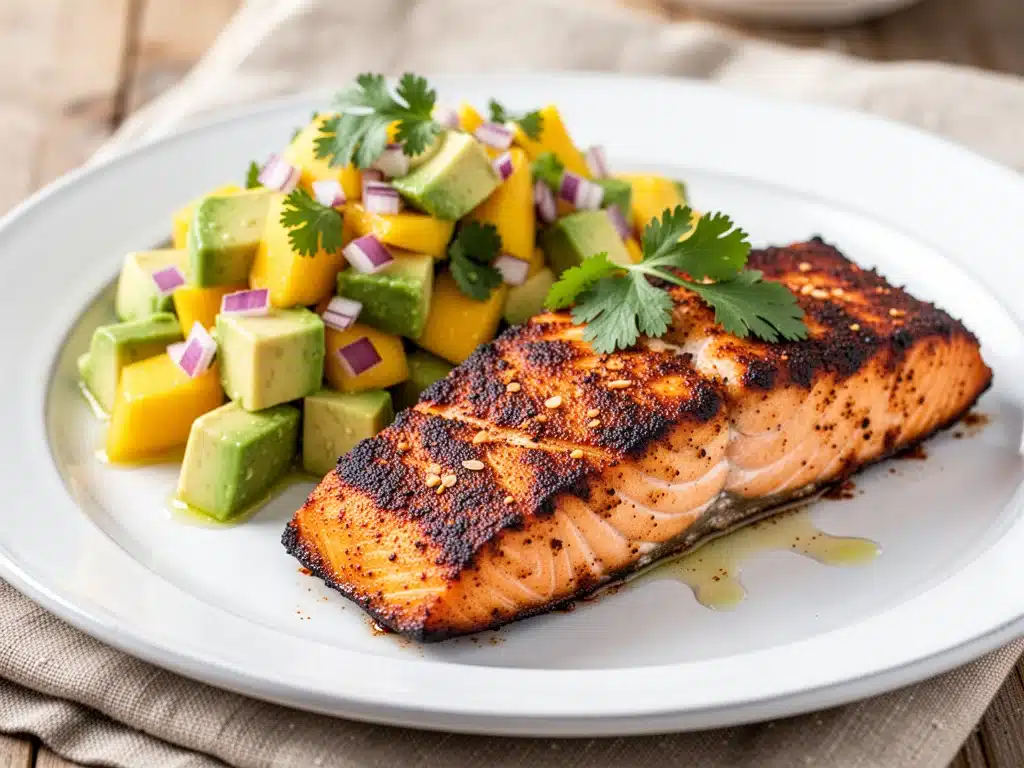
But here’s the thing: I didn’t throw it out. I scraped off the bad crust, turned the heat back up (after opening every window in the house), and tried again. This time, I let the pan get screaming hot. I let the butter foam. I didn’t touch the fish for four minutes. And when I flipped it? Magic. A deep, mahogany-red crust that cracked when I pressed it. Juicy, flaky interior. Spicy, aromatic, and done in 20 minutes flat.
That was three years ago. Since then, I’ve made this Blackened Cajun Salmon probably fifty times. It’s my secret weapon for busy weeknights, date nights, and even lazy Sundays when I want to feel fancy without the effort. It’s healthy, it’s affordable, and it tastes like a restaurant meal but costs a fraction of the price.
If you’ve been intimidated by the “blackening” process or worried about the smoke, don’t be. I’m going to walk you through exactly how to get that perfect crust without setting off your alarms or ruining your dinner. This recipe has saved me more times than I can count.
Why You’ll Love This Recipe
There are about ten reasons I keep coming back to this salmon recipe, but let’s be real: it’s mostly because it works every single time. Here’s why this Blackened Cajun Salmon deserves a permanent spot in your weekly rotation.
Stupid Simple — Seriously, if you can melt butter and sprinkle spices, you can make this. There’s no marinating overnight. No complex sauce-making. You mix spices, coat the fish, and cook it. Done. I’ve walked my teenage son through it over FaceTime while he was at college, and he nailed it on the first try.
Lightning Fast — 20 minutes from start to finish. That’s it. Ten minutes of prep (mostly just mixing spices) and ten minutes of cooking. I make this on weeknights when I get home at 7pm, put the kids to bed, and still have time to relax before 8:30. It’s the ultimate no-stress dinner.
Healthy Without Being Sad — Salmon is packed with omega-3s, protein, and healthy fats. No heavy creams, no breading, no deep frying. Just fish and spices. It feels indulgent because of the butter and the crust, but it’s genuinely good for you. I eat this at least twice a week, and I feel great.
Flavor Bomb — The Cajun seasoning creates this incredible aroma that fills the house. It’s smoky, spicy, paprika-rich, and garlicky. The butter bastes the fish as it cooks, keeping it moist while the spices form that crispy blackened crust. It’s a texture and flavor combo that never gets old.
Budget-Smart — Salmon can be expensive, but you only need one fillet per person. If you buy a whole side and freeze the rest, it’s way cheaper than eating out. Plus, the spices are pantry staples you probably already have. This feeds 4 people for under $30, depending on where you shop.
Versatile — I serve this with rice, with quinoa, over a salad, or just with steamed veggies. It’s great for meal prep (though best fresh) and works for dinner parties too. It looks impressive but is actually super casual.
This is my go-to when I need dinner to just work. No complicated techniques, no weird ingredients, just reliable, delicious food that makes everyone happy. Even my picky eater kids love it (as long as I tell them it’s “spicy fish” and not “blackened cajun salmon”).
Ingredients You’ll Need
Here’s the best part: you probably have most of this already. The magic of Blackened Cajun Salmon isn’t in exotic ingredients; it’s in the ratio of spices and the heat of your pan. But a few key items make a huge difference.
For the Blackening Spice Rub
Paprika (2 tablespoons) — This is the base. Use smoked paprika if you have it; it adds that deep, smoky flavor that mimics grilling. Regular paprika works fine too, but smoked is better. This gives the rub its beautiful red color.
Garlic Powder (1 tablespoon) — Fresh garlic burns too fast in a hot pan, so powder is key here. It infuses the crust with that savory garlic flavor without burning. Don’t skip it.
Onion Powder (1 tablespoon) — Adds sweetness and depth. Balances out the heat from the cayenne.
Cayenne Pepper (1-2 teaspoons) — This is where you control the heat. Start with 1 teaspoon if you’re sensitive to spice. Go to 2 teaspoons if you like it hot. I use 1.5 teaspoons for the perfect kick.
Black Pepper (1 teaspoon) — Freshly cracked is best, but ground works fine. Adds sharpness.
Dried Thyme (1 teaspoon) — Earthy and aromatic. Complements the seafood beautifully.
Dried Oregano (1 teaspoon) — Another classic Cajun herb. Adds a bit of bitterness that balances the sweetness of the paprika.
Salt (1 teaspoon) — Kosher salt is ideal because it’s less salty by volume than table salt. Adjust to taste.
Optional: White Pepper (½ teaspoon) — Adds a different kind of heat that’s more earthy. Traditional Cajun cooking uses it, but it’s optional.
For the Salmon
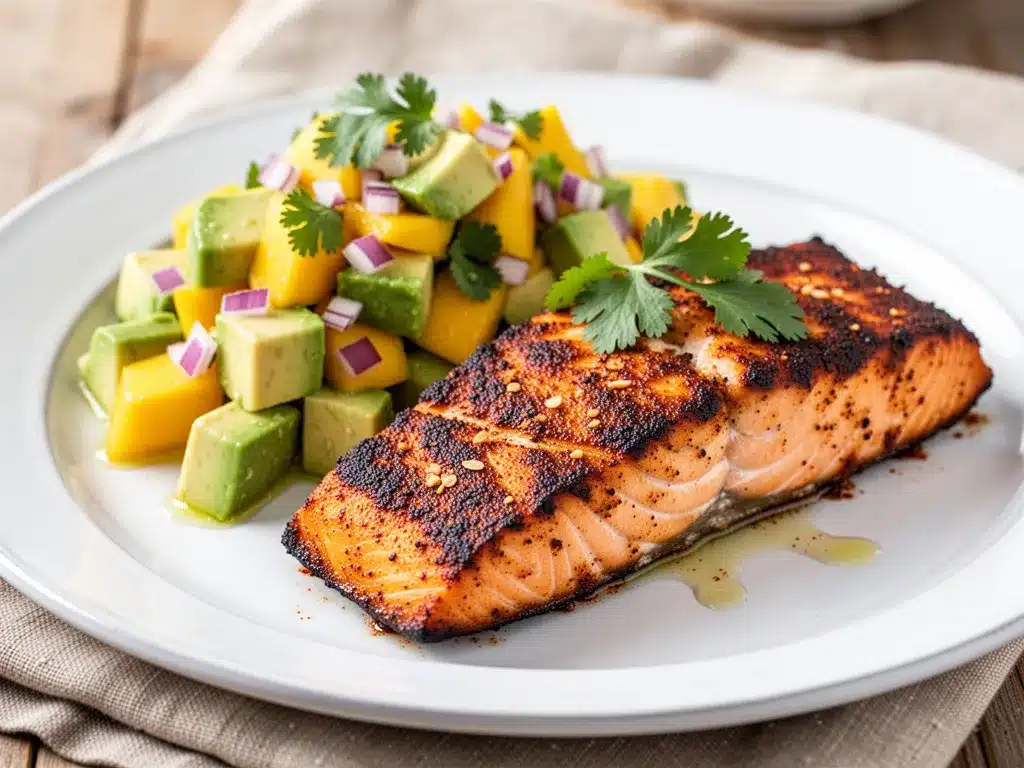
Salmon Fillets (4 fillets, about 6oz each) — Look for fresh or thawed fillets that are uniform in thickness. Skin-on or skin-off is your choice. I prefer skin-on for easier handling, but skin-off is easier to eat. Wild-caught is better for flavor and sustainability, but farmed is fine if that’s what you have.
Unsalted Butter (3 tablespoons) — This is crucial. You melt the butter and brush it on the fish before dredging in spices. The butter helps the spices stick and creates the “blackened” crust. Use real butter, not margarine. It makes a huge difference.
Neutral Oil (2 tablespoons) — Avocado oil or canola oil. High smoke point is essential here. Olive oil will burn. You need oil to prevent sticking and help conduct heat.
For Serving
Lemon (1-2 lemons) — Sliced or wedged. The acid cuts through the richness of the butter and spice. Essential.
Fresh Parsley (optional) — Chopped, for garnish. Adds color and a fresh bite.
Quick Substitution Note — Can’t find Cajun seasoning? Make your own with the spices above. If you buy a store-bought blend like Zatarain’s or Slap Ya Mama, reduce the salt in the recipe since those blends are already salty.
Equipment Needed
You don’t need fancy equipment for this. Here’s what I actually use.
Cast Iron Skillet — I swear by this. Cast iron holds heat incredibly well, which is necessary for blackening. It creates an even, intense crust. If you don’t have cast iron, a heavy stainless steel skillet works too. Avoid non-stick—it can’t handle the high heat needed for a true blackened crust, and the seasoning might get ruined.
Small Bowl — For mixing the spices. A ramekin or small mixing bowl works.
Pastry Brush — Or just a fork. For brushing the melted butter onto the salmon. A silicone brush is easiest.
Tongs — For flipping the fish. Metal tongs are best for high heat.
Plate — To hold the buttered salmon before dredging in spices.
Good Ventilation — Not equipment, but essential. Turn on your stove hood fan. Open a window. Blackening creates smoke, and you want it to go somewhere other than your living room.
How to Make It: Step-by-Step
Alright, let’s make this! I’m walking you through exactly how I do it, including the little tricks I’ve picked up over the years.
Step 1: Make the Spice Rub (2 minutes)
In a small bowl, combine the paprika, garlic powder, onion powder, cayenne pepper, black pepper, thyme, oregano, salt, and white pepper (if using). Stir well with a fork until the colors are uniform. If you’re using store-bought Cajun seasoning, you can skip this step, but I recommend adding an extra teaspoon of paprika and a pinch of garlic powder to boost the flavor.
Step 2: Prep the Salmon (3 minutes)
Pat the salmon fillets dry with paper towels. This is important—moisture is the enemy of a good crust. If the fish is wet, the spices will slide off, and the fish will steam instead of sear. Season both sides lightly with salt if you didn’t salt the rub heavily.
Step 3: Melt the Butter (1 minute)
Melt the 3 tablespoons of butter in the microwave or a small saucepan. It should be liquid but not hot. Set it aside.
Step 4: Coat the Fish (2 minutes)
Brush both sides of each salmon fillet generously with the melted butter. Then, lay the fillets on a plate. Generously sprinkle the spice rub on both sides, pressing it gently into the butter so it sticks. You want a thick, even coat. Don’t be shy with the spices—this is where the flavor is.
Step 5: Heat the Pan (3 minutes)
Place your cast iron skillet over medium-high to high heat. Add the neutral oil. Let it heat up until it shimmers and just starts to smoke. This is critical. The pan needs to be very hot. If you’re unsure, flick a drop of water into the pan—it should sizzle and evaporate instantly.
Step 6: Cook the Salmon (8-10 minutes total)
Carefully place the salmon fillets in the hot pan. Lay them away from you to avoid oil splatter. Do not move them! Let them cook undisturbed for 4-5 minutes. You’ll see the spices darken and form a crust. The edges will turn opaque about halfway up the side of the fillet.
Flip the fillets carefully with tongs. Cook for another 4-5 minutes on the second side. The internal temperature should reach 145°F (63°C) for food safety, but I prefer pulling it at 140°F (60°C) as it will carry over cook slightly. The fish should flake easily with a fork.
Step 7: Rest and Serve (1 minute)
Remove from the pan and let rest for 1-2 minutes. This allows the juices to redistribute. Serve immediately with lemon wedges and fresh parsley.
Total Time: About 20 minutes (5 minutes prep, 10 minutes cook, 5 minutes buffer).
Expert Tips & Tricks
Here’s everything I’ve learned from making this dozens of times. These tips will save you from my mistakes.
Don’t Crowd the Pan — If you’re cooking for 4 people, cook in batches if your skillet isn’t huge. Overcrowding lowers the pan temperature, which means the fish steams instead of sears. You want that high heat for the blackened crust. If you cook in batches, keep the cooked fish warm in a 200°F oven.
Use High Smoke Point Oil — Avocado oil is best. Canola or vegetable oil works. Do NOT use extra virgin olive oil or butter alone for the initial sear—they will burn and taste bitter. The butter goes on the fish, the oil goes in the pan.
Pat Dry, Dry, Dry — I cannot stress this enough. Wet salmon = no crust. Use paper towels and be thorough. If your salmon is thawed and watery, let it sit on the counter for 10 minutes to air dry before cooking.
Don’t Flip Too Early — I know it’s tempting to check. Don’t. Let the crust form. If you try to flip it too soon, the spices will stick to the pan, and you’ll lose your crust. Wait until you see the edges turning opaque and the spices darkening.
Manage the Smoke — Blackening creates smoke. Turn on your fan. Open windows. If your smoke alarm is sensitive, you might need to lower the heat slightly to medium-high instead of high, but you’ll sacrifice a bit of crust. It’s a trade-off. I usually cook this outside on the patio grill if I have it—same technique, less smoke indoors.
Common Mistake: Sauce is too watery — This doesn’t apply to blackened salmon, but a common mistake is flipping too early and releasing moisture. If your pan looks wet, your heat was too low or the fish was too wet. Pat dry next time.
Pro Trick: The Butter Baste — After flipping, you can add a small knob of butter to the pan and spoon it over the fish for the last minute of cooking. This adds extra richness and helps cook the top gently.
Variations & Substitutions
Once you’ve nailed the basic version, here’s how you can mix it up. I’ve tried all of these.
Spicy Cajun Shrimp — Use the same spice rub on large shrimp. Cook for 2-3 minutes per side. Faster, equally delicious. Great over rice.
Blackened Chicken Breast — Use the same technique on chicken breasts. Cook for 5-6 minutes per side until internal temp reaches 165°F. Juicy and spicy.
Mild Version — Reduce or eliminate the cayenne pepper. Use extra paprika and garlic powder for flavor without the heat. Great for kids.
Herb Crusted — Swap the cayenne and paprika for extra dried dill, parsley, and lemon zest. More Mediterranean, less Cajun.
Gluten-Free — This recipe is naturally gluten-free as long as your Cajun seasoning doesn’t contain wheat fillers (most don’t, but check labels). Serve with rice or quinoa.
Dairy-Free — Replace the butter with avocado oil or ghee (if you tolerate clarified butter). Brush the fish with oil and dredge in spices. Still delicious.
Veggie Side Pairing — Serve with roasted asparagus, grilled zucchini, or a simple arugula salad with lemon vinaigrette. The spices pair well with charred vegetables.
Serving & Storage
How to Serve:
I usually serve this straight from the skillet at the dinner table—it looks rustic and stays warm. But here are other ways I’ve enjoyed it:
Side Dishes:
– Rice pilaf or cauliflower rice
– Quinoa with black beans
– Steamed broccoli or green beans
– Simple green salad with balsamic vinaigrette
– Corn on the cob (if it’s summer)
Toppings Bar:
When I have guests, I put out: lemon wedges, fresh chopped parsley, hot sauce (for extra heat), and crumbled feta cheese (surprisingly good!).
Storage Instructions:
Refrigerator:
Store in an airtight container for up to 3 days. The crust will soften, which is normal. Reheat gently.
Reheating:
Best method: Reheat in a skillet over medium-low heat for 2-3 minutes per side to crisp up the crust again.
Microwave method: Heat in 30-second intervals. It will get rubbery if you overdo it.
Avoid: The microwave if you care about texture. It makes the fish dry.
Freezing:
I don’t recommend freezing cooked blackened salmon. The texture changes, and the crust gets soggy. Freeze raw fillets instead, vacuum-sealed, for up to 3 months. Thaw in the fridge overnight before cooking.
Meal Prep:
Make the spice rub in bulk and store in a jar. Cook the salmon fresh each night. If you must prep ahead, cook the fish and reheat gently in the oven at 275°F until warm, to avoid drying it out.
Nutrition Information
I’m not a nutritionist, but here’s the breakdown if you’re tracking.
Per Serving (based on 4 servings, 1 fillet each):
| Nutrient | Amount |
|———-|——–|
| Calories | 320 |
| Protein | 34g |
| Carbs | 2g |
| Fiber | 1g |
| Sugar | 0g |
| Fat | 18g |
| Saturated Fat | 7g |
| Cholesterol | 95mg |
| Sodium | 680mg |
What’s Good:
– High in protein
– Low in carbs
– Rich in omega-3 fatty acids
– No added sugar
What to Know:
– Sodium is moderate due to salt and Cajun seasoning. Use low-sodium salt if needed.
– Fat content is from butter and salmon itself. Healthy fats, but calorie-dense.
My Take:
“This is comfort food that’s actually good for you. It’s not a diet recipe in the sense that it’s light and airy, but it’s nutrient-dense and satisfying. I eat this as part of a balanced diet, and it keeps me full for hours.”
Final Thoughts
So that’s my go-to Blackened Cajun Salmon! I’ve probably talked your ear off at this point, but when you make a recipe this often, you have a lot to say about it.
This has saved weeknight dinners more times than I can count. It’s my answer to “what’s for dinner” when I’m tired, don’t want takeout, and still want something that tastes really good. My kids are happy, my husband’s happy, and I’m happy because I’m not stressed about cooking.
Make it yours! Try different add-ins, swap in your favorite vegetables, adjust the garlic (though more is always better in my opinion). The best recipes are the ones you adapt to your family’s tastes.
If you make this, drop a comment and let me know what you think! I love hearing how recipes turn out in your kitchen. And if something doesn’t work, tell me that too—I’m here to help troubleshoot.
Happy cooking! And I hope your kitchen smells half as good as mine does right now.
Frequently Asked Questions
Can I use a non-stick pan?
You can, but you won’t get the same crust. Non-stick pans can’t handle the high heat needed for true blackening, and the coating might degrade. Cast iron or stainless steel is best. If you only have non-stick, use medium-high heat and accept a softer crust.
Why did my spices burn?
The pan was too hot, or you cooked it too long. Blackened spices should be dark brown, not black and charred. If they’re burning, lower the heat slightly. Also, ensure your pan is clean before adding oil—old residue can burn.
Can I make this ahead for a dinner party?
Prep the spice rub and butter the fish ahead of time, but cook it fresh. Salmon is best served immediately. If you must cook ahead, reheat gently in the oven at 275°F for 10 minutes.
Why did my sauce get grainy/lumpy?
This recipe doesn’t have a sauce, but if you’re wondering why the crust fell off, it’s usually because the fish was too wet or the pan wasn’t hot enough. Pat dry and heat the pan properly.
Can I use jarred garlic?
No, use garlic powder in the rub. Fresh garlic will burn in the high heat. Jarred garlic is for sautéing, not for dry rubs.
How do I reheat leftovers without it getting dry?
Reheat in a skillet over low heat with a splash of water or broth, covered, for 2-3 minutes. Or use the oven at 275°F. Avoid the microwave.
Can I double this recipe?
Absolutely! Double the spices and use your biggest skillet. Cook in batches if needed. The cooking times stay the same.
Pin This Recipe!
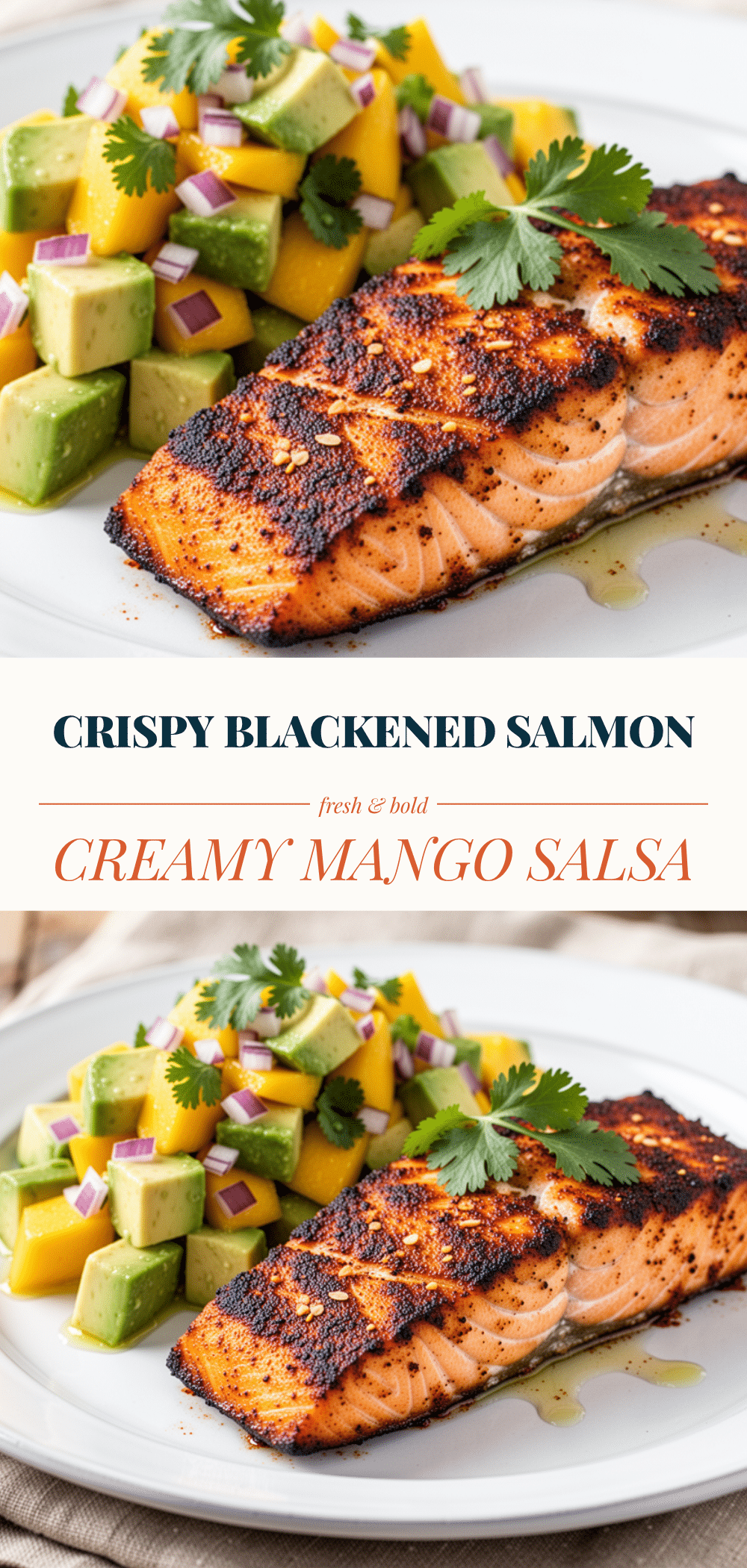
Blackened Cajun Salmon: 20 Min Easy Healthy Dinner
- Total Time: 20 minutes
- Yield: 4 servings 1x
Description
A quick, healthy, and flavorful weeknight dinner featuring salmon fillets coated in a spicy Cajun spice rub and seared in a hot skillet with butter for a crispy, blackened crust.
Ingredients
- 2 tablespoons Paprika (smoked preferred)
- 1 tablespoon Garlic Powder
- 1 tablespoon Onion Powder
- 1–2 teaspoons Cayenne Pepper
- 1 teaspoon Black Pepper
- 1 teaspoon Dried Thyme
- 1 teaspoon Dried Oregano
- 1 teaspoon Salt (Kosher)
- 0.5 teaspoon White Pepper (optional)
- 4 Salmon Fillets (about 6oz each)
- 3 tablespoons Unsalted Butter
- 2 tablespoons Neutral Oil (Avocado or Canola)
- 1–2 Lemons (for serving)
- Fresh Parsley (optional, for garnish)
Instructions
- In a small bowl, combine paprika, garlic powder, onion powder, cayenne pepper, black pepper, thyme, oregano, salt, and white pepper. Stir until uniform.
- Pat salmon fillets dry with paper towels to ensure a good crust.
- Melt the 3 tablespoons of butter in the microwave or a small saucepan.
- Brush both sides of each salmon fillet generously with melted butter.
- Sprinkle the spice rub generously on both sides of the buttered fillets, pressing gently to adhere.
- Heat a cast iron skillet over medium-high to high heat with the neutral oil until it shimmers and just starts to smoke.
- Place salmon fillets in the hot pan, laying them away from you to avoid splatter. Do not move them for 4-5 minutes.
- Flip fillets carefully with tongs and cook for another 4-5 minutes until internal temperature reaches 140-145°F and fish flakes easily.
- Remove from pan and let rest for 1-2 minutes before serving with lemon wedges and parsley.
Notes
Ensure the pan is very hot before adding fish to create the blackened crust. Do not crowd the pan; cook in batches if necessary. Pat salmon dry thoroughly to prevent steaming. Use high smoke point oil like avocado oil. If using store-bought Cajun seasoning, reduce added salt.
- Prep Time: 5 minutes
- Cook Time: 10 minutes
- Category: Main Course
- Cuisine: Cajun
Nutrition
- Serving Size: 1 fillet
- Calories: 320
- Sodium: 680
- Fat: 18
- Saturated Fat: 7
- Carbohydrates: 2
- Fiber: 1
- Protein: 34
Keywords: blackened salmon, cajun salmon, healthy dinner, quick recipes, weeknight dinner, gluten-free, high protein